
How Physiotherapy Supports Recovery After an Orthopaedic Injury or Surgery
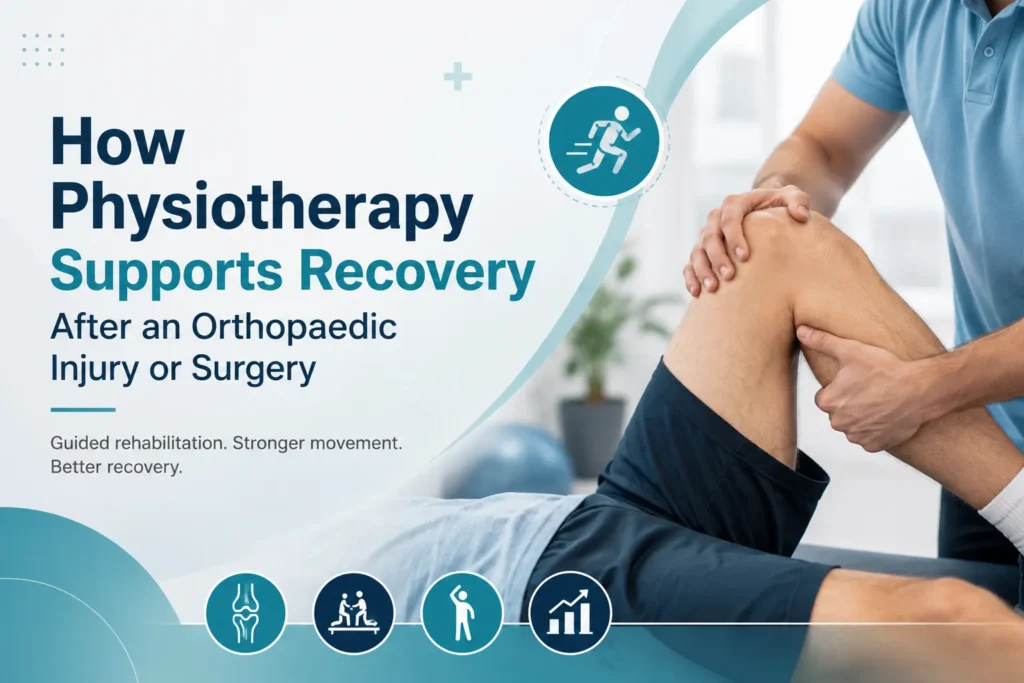
Recovering from an orthopaedic injury or surgery involves more than waiting for pain to settle. During recovery, muscles may become weaker, joints can feel stiff, and normal activities such as walking, climbing stairs, lifting objects or returning to exercise may become difficult.
Physiotherapy may support recovery by helping patients gradually improve movement, strength, balance and confidence. However, the right rehabilitation approach depends on the diagnosis, treatment received, stage of healing and the patient’s general health.
At KMZ Orthoman, an orthopaedic assessment can help determine whether physiotherapy, home exercises, imaging or another treatment approach may be appropriate.
What Is Orthopaedic Physiotherapy?
Orthopaedic physiotherapy focuses on conditions involving bones, joints, muscles, tendons and ligaments. It may be considered after an injury, during non-surgical treatment or following an orthopaedic operation.
A rehabilitation programme may help restore joint movement, improve muscle support and guide a gradual return to normal daily activities. It may include movement exercises, strengthening, balance training, walking guidance and advice about activities that should be modified or temporarily avoided.
There is no single physiotherapy programme that is suitable for every patient. Someone recovering after knee surgery may need a different approach from a person with shoulder stiffness, an ankle injury or a muscle strain. Exercises and precautions should match the patient’s individual condition and stage of recovery.
How Physiotherapy May Support Recovery
Pain, swelling and fear of further injury can cause patients to reduce their normal movement. While rest may be necessary during the early stages of some injuries, avoiding movement for too long may contribute to muscle weakness and joint stiffness.
When movement is medically safe, physiotherapy can gradually reintroduce activity. It may help improve joint mobility, muscle strength, balance, coordination and normal movement patterns.
Physiotherapy can also guide patients about which activities should be continued, reduced or gradually increased. Progress should be based on symptoms, physical function and medical advice rather than following a fixed recovery timeline.
The goal is not simply to complete exercises. Rehabilitation should help the patient move more safely and return to daily activities with better control and confidence.
When May Physiotherapy Be Recommended?
Physiotherapy may be considered when pain, stiffness, weakness or restricted movement affects daily life. It may also form part of recovery after selected sports injuries or orthopaedic procedures.
Common situations in which rehabilitation may be discussed include:
- Joint stiffness or reduced range of movement
- Muscle weakness after injury, rest or surgery
- Difficulty walking or climbing stairs
- Selected ligament, tendon or muscle injuries
- Balance or joint-stability problems
- Reduced confidence during movement
- Recovery after an orthopaedic procedure
- Difficulty returning to work, exercise or sport
Patients with an active, recurring or sports-related injury may first benefit from an assessment by a Sports Injury Specialist in Kuala Lumpur. This can help identify the affected structure and determine whether rehabilitation, imaging or another treatment approach should be considered.
Physiotherapy After an Orthopaedic Injury
After an orthopaedic injury, the first step is to understand what has been affected. Some injuries may only require activity modification and gradual rehabilitation, while others may require imaging, temporary protection or specialist treatment.
Beginning exercises without understanding the injury may not always be suitable. For example, severe pain, significant swelling, instability or an inability to put weight on the affected limb may require medical assessment before rehabilitation begins.
Once movement is considered safe, early physiotherapy may focus on reducing stiffness and limiting muscle weakness. As recovery progresses, the programme may include strengthening, balance, endurance and movements related to work or sport.
Returning to full activity too quickly may increase pain or swelling. Progress should therefore be based on movement quality, strength, stability and guidance from the treating professional.
Physiotherapy After Orthopaedic Surgery
Physiotherapy is often considered during recovery after orthopaedic surgery, but the timing and rehabilitation plan depend on the procedure performed.
Recovery after knee arthroscopy may differ from recovery after ligament repair, fracture surgery or joint replacement. Some patients may begin selected movements early, while repaired tissues may need protection before certain exercises are introduced.
A post-operative rehabilitation programme may include walking guidance, gentle mobility exercises, muscle activation and gradual strengthening. Later stages may focus on returning to daily activities, work and, where appropriate, exercise or sport.
Patients should follow the instructions provided by their surgeon or treating team. Copying another patient’s exercise programme may not be safe because the operation, tissue healing, precautions and recovery goals may be different.
Shoulder Stiffness and Movement Problems
Persistent shoulder pain and restricted movement can have several causes. Some patients may experience difficulty raising the arm, reaching behind the back, getting dressed or sleeping comfortably.
Physiotherapy may be included in the treatment of selected shoulder conditions, but the correct exercises depend on the diagnosis and level of stiffness.
Patients with ongoing shoulder pain and restricted movement can learn more about Frozen Shoulder Treatment and when an orthopaedic assessment may be appropriate.
What May a Rehabilitation Plan Include?
A rehabilitation plan is normally adjusted as the patient progresses. It should not remain exactly the same throughout the entire recovery period.
Depending on the condition, treatment and recovery stage, a rehabilitation plan may include:
- Guided mobility and flexibility exercises
- Muscle activation exercises
- Progressive strengthening
- Balance and coordination training
- Joint-control exercises
- Walking and movement-pattern guidance
- Advice about work and daily activities
- Gradual return to exercise or sport
- A suitable home exercise programme
Exercises should be performed using the recommended technique, frequency and limits. Increasing the number of exercises too quickly does not always lead to faster recovery.
Severe or increasing pain, unexpected swelling or a sudden loss of movement should be discussed with the treating professional rather than ignored.
Physiotherapy and Rehabilitation Videos
The following educational videos provide general information about physiotherapy,
movement and rehabilitation. They may help patients understand how guided
exercises and gradual movement can support recovery after selected orthopaedic
injuries or surgical procedures.
These videos provide general guidance and do not replace an individual
assessment, diagnosis or personalised rehabilitation plan. Exercises shown
may not be suitable for every patient, injury or stage of recovery.
Can Physiotherapy Exercises Be Done at Home?
Home exercises are commonly included in rehabilitation. They can help patients continue working on movement and strength between appointments.
However, the exercises should be suitable for the patient’s diagnosis and stage of healing. The patient should understand how often the exercises should be performed, how many repetitions are appropriate and which symptoms mean that the exercise should be stopped.
Exercises found online or copied from another person may not be suitable for every condition. A movement that is helpful during one stage of recovery may be inappropriate during another stage.
Home exercises are most useful when they form part of a clear and individual rehabilitation plan.
Does Every Patient Need Physiotherapy?
No. Not every patient requires a structured physiotherapy programme.
Some people may recover with medical advice, temporary changes to their activities and an appropriate home exercise plan. Other patients may require regular physiotherapy when movement, strength, balance or physical function remains limited.
The need for physiotherapy depends on the diagnosis, symptoms, treatment received, daily activities and recovery progress.
A further assessment may be helpful when pain or swelling becomes worse, movement remains restricted or recovery stops progressing.
When Should an Orthopaedic Doctor Be Consulted First?
Medical assessment may be more appropriate before starting exercises when the diagnosis is unclear or symptoms suggest a significant injury.
Prompt medical attention should be considered when a patient experiences:
- Severe pain after an injury
- Visible joint or limb deformity
- Inability to walk or put weight on the affected limb
- Numbness or sudden weakness
- A completely locked joint
- Significant or rapidly increasing swelling
- A hot and swollen joint accompanied by fever
- Repeated joint instability or giving way
Physiotherapy should not delay the diagnosis of a fracture, infection, major ligament injury or another condition that may require medical treatment.
Assessment is also advisable when pain continues, swelling repeatedly returns or movement remains limited despite rest and activity modification.
Physiotherapy Guidance at KMZ Orthoman
Depending on the patient’s condition and the findings during the appointment, Dr KMZ may provide basic rehabilitation guidance or selected physiotherapy support.
Patients who require a structured or longer rehabilitation programme may be advised about suitable next steps based on their condition and recovery needs.
At KMZ Orthoman, rehabilitation is discussed as part of an orthopaedic treatment plan rather than as a separate physiotherapy-only service. The patient’s condition is assessed before appropriate recovery guidance is discussed.
KMZ Orthoman is not promoted as a dedicated physiotherapy centre. Patients should book an orthopaedic consultation so their symptoms and condition can be properly assessed before rehabilitation guidance is recommended.
Discuss Your Recovery With Dr KMZ
Pain, weakness and restricted movement can affect work, exercise and everyday life. A proper orthopaedic assessment can help identify the cause and determine whether physiotherapy, rehabilitation, imaging or another treatment approach may be suitable.
Patients can book an orthopaedic consultation with Dr KMZ to discuss their symptoms, recovery progress and appropriate next steps.
Frequently Asked Questions
When should physiotherapy begin after orthopaedic surgery?
The timing depends on the procedure, the tissue treated and the surgeon’s
instructions. Some patients may begin selected movements early, while
others need a period of protection before certain exercises are introduced.
Is physiotherapy expected to be painful?
Mild effort or temporary discomfort may occur during rehabilitation.
Severe, increasing or unexpected pain should not be ignored, as the
exercise or activity may need to be adjusted.
How long does orthopaedic rehabilitation take?
There is no fixed recovery period. The duration depends on the injury or
procedure, healing, general health, strength and the patient’s daily
activity goals.
Can physiotherapy help with knee pain?
Physiotherapy may help selected patients improve movement, strength and
joint control. Persistent, severe or unexplained knee pain should be
assessed before a rehabilitation plan is selected.
Can rehabilitation exercises be performed at home?
Home exercises are commonly included in rehabilitation, but they should
be selected for the individual patient and performed using the recommended
technique, frequency and precautions.
Ask a Question or Leave a Comment
Share your feedback or ask a general question about this article.
No comments yet. Be the first to share your feedback or ask a question.