
kmzorthoman@gmail.com

Move Better With Expert Care

KMZ Orthoman Knee Osteoarthritis Care

Knee Osteoarthritis Treatment in Kuala Lumpur

Get specialist assessment and personalised osteoarthritis treatment for knee pain, stiffness, swelling and reduced mobility. Dr KMZ evaluates the severity of knee osteoarthritis and discusses suitable treatment options, including exercise and lifestyle care, medication, selected knee injections and surgical treatment when clinically appropriate.

Knee Osteoarthritis Assessment Non-Surgical & Surgical Options Personalised Treatment Planning

Understanding Knee Osteoarthritis

What Is Knee Osteoarthritis?

Knee osteoarthritis is a joint condition involving changes in the cartilage, bone and other structures around the knee. These changes may contribute to pain, stiffness, swelling and reduced mobility.
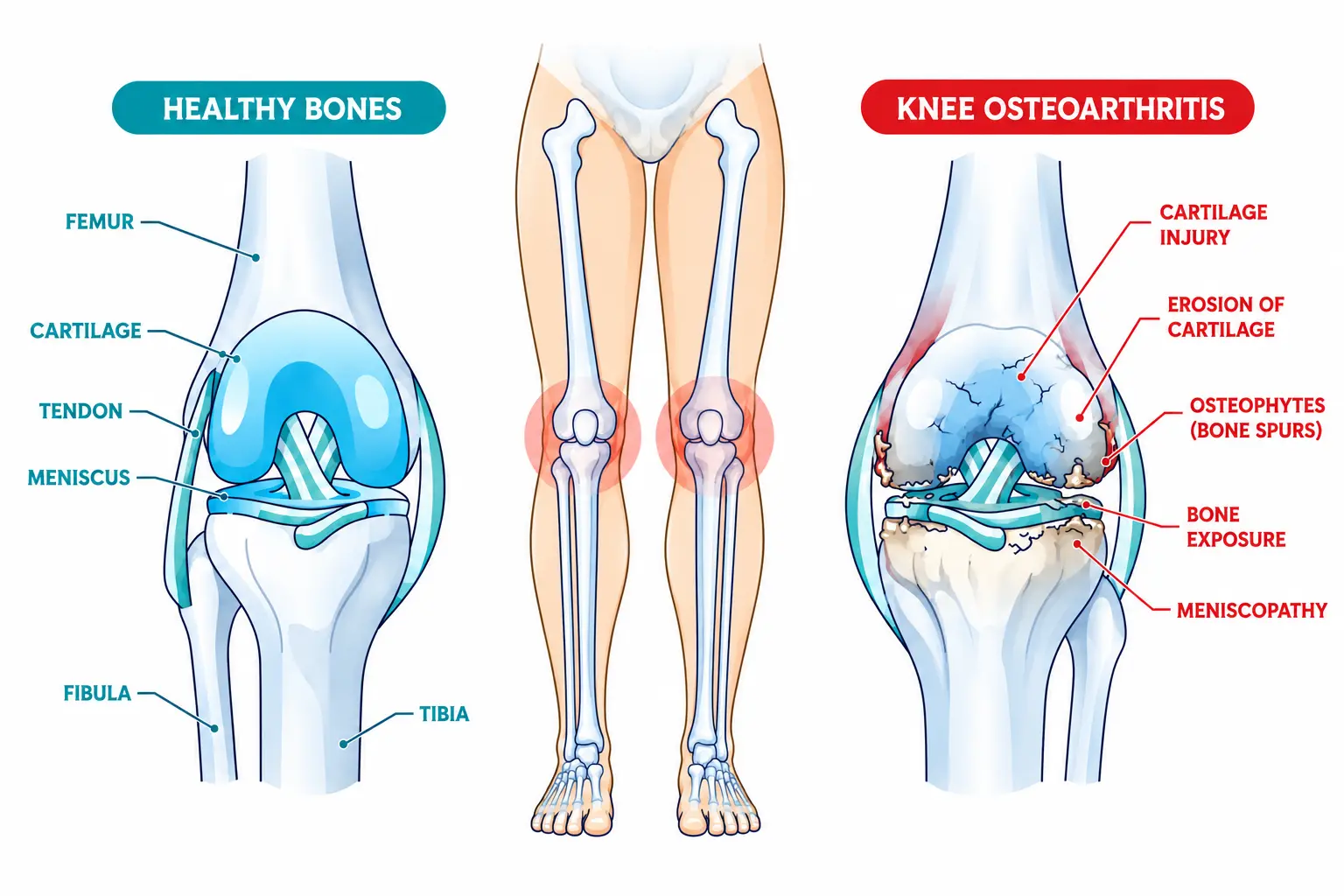
Healthy knee compared with knee osteoarthritis showing cartilage damage, bone spurs and joint changes

Osteoarthritis is more than simply “wear and tear”. As the condition develops, the smooth cartilage covering the joint surfaces may become thinner or damaged, while changes can also occur in the bone and other tissues around the knee.

Symptoms and severity differ between patients. A clinical assessment helps determine how knee osteoarthritis is affecting movement and which osteoarthritis treatment options may be appropriate.

Cartilage Changes

The smooth cartilage covering the knee joint surfaces may become thinner or damaged over time.

Joint & Bone Changes

Osteoarthritis may also involve changes in the bone and other structures surrounding the knee.

Pain & Stiffness

Knee pain, stiffness, swelling and discomfort during movement are common concerns.

Reduced Mobility

Some patients may experience difficulty with walking, stairs, standing or everyday activities.

Knee Osteoarthritis Symptoms

What Are the Common Symptoms of Knee Osteoarthritis?

Common knee osteoarthritis symptoms include knee pain, stiffness, swelling and reduced movement. Symptoms can vary between patients and may make walking, climbing stairs and everyday activities more difficult.

  • Knee Pain

    Pain may become more noticeable during walking, standing, climbing stairs or other activities that place weight on the knee.

  • Knee Stiffness

    The knee may feel stiff after rest or when first starting to move, making bending and straightening less comfortable.

  • Swelling & Tenderness

    Some patients may notice swelling, tenderness or discomfort around the affected knee joint.

  • Reduced Knee Movement

    Osteoarthritis may make it harder to fully bend or straighten the knee and can reduce the joint's normal range of movement.

  • Difficulty With Daily Activities

    Walking longer distances, using stairs, standing for longer periods or getting up from a chair may become more difficult.

  • Changes in Knee Alignment

    In more advanced cases, some patients may notice gradual changes in the shape or alignment of the knee.

When Should Knee Osteoarthritis Be Assessed?

A clinical assessment is useful when knee symptoms are persistent, worsening or beginning to interfere with movement, daily activities or quality of life.

  • Knee pain or stiffness is regularly limiting walking, stairs or normal daily activities.
  • Knee symptoms continue despite initial activity modification or conservative care.
  • There is progressive bowing, knock-knee appearance or another noticeable change in knee alignment.
  • The knee becomes unusually hot or swollen, or symptoms worsen rapidly and require medical evaluation.

Knee Osteoarthritis Treatment

What Are the Treatment Options for Knee Osteoarthritis?

Knee osteoarthritis treatment may include exercise, medication, selected knee injections and surgery, depending on symptoms and the severity of the condition.

Orthopaedic doctor examining a patient's knee during osteoarthritis treatment assessment
01

Exercise & Lifestyle

Strengthening exercises, low-impact activity and weight management may help improve knee function and mobility.

02

Medication & Pain Relief

Topical or oral medication may be considered to help manage knee pain based on the patient's medical needs.

03

Knee Injections

Selected patients may be considered for knee injections, including corticosteroid, hyaluronic acid or PRP.

04

Surgical Treatment

Surgery may be considered when symptoms significantly affect mobility and non-surgical treatment is no longer sufficient.

Assessment Process

How Is Knee Osteoarthritis Assessed?

Knee osteoarthritis assessment usually involves reviewing symptoms, examining the knee and using imaging when needed. The findings help guide a treatment plan based on pain, movement and daily function.

  1. Consultation & Symptom Review

    The assessment begins by discussing knee pain, stiffness, swelling, mobility and how symptoms affect everyday activities.

  2. Knee Examination & Imaging

    The knee is examined for movement, tenderness, swelling and alignment. X-rays or other imaging may be used when clinically appropriate.

  3. Personalised Treatment Plan

    Treatment options are considered according to symptoms, knee function, clinical findings and the patient's individual needs.

Why Is Assessment Important?

Knee osteoarthritis does not affect every patient in the same way. A proper assessment helps determine which treatment options may be suitable for the individual patient.

Patient-Focused Orthopaedic Care

Why Choose KMZ for Knee Osteoarthritis Treatment?

Dr KMZ provides specialist assessment and personalised treatment guidance for patients with knee osteoarthritis, pain, stiffness and reduced mobility.

Detailed Knee Assessment

Knee pain, stiffness, swelling, movement and daily function are reviewed carefully before treatment options are discussed.

Personalised Treatment Planning

Treatment options are considered according to symptoms, knee function, clinical findings and individual patient needs.

Non-Surgical Treatment Options

Exercise, lifestyle measures, medication and selected knee injections may be considered based on clinical assessment.

Surgical Treatment Guidance

When osteoarthritis significantly affects mobility and daily function, suitable surgical options may also be discussed.

Patient Feedback

What Patients Say About KMZ Orthoman

Read feedback shared by patients on Google about their experience with KMZ Orthoman and orthopaedic care.

Google Reviews
Real Patient Experiences

Feedback shared through Google reviews.

Reviews help patients make an informed decision

Experiences may vary from patient to patient. A consultation is required to discuss your individual symptoms and suitable next steps.

Reviewed for Patient Education

This page has been reviewed by Dr. Kamarulzaman for clarity and patient education. The information is general in nature and does not replace a personal consultation, diagnosis or treatment plan. Treatment decisions should be made after proper clinical assessment.

Frequently Asked Questions

Common Questions About Knee Osteoarthritis Treatment

Find clear answers about knee osteoarthritis symptoms, treatment options, exercise, medication, knee injections, imaging and surgical treatment in Kuala Lumpur.

What is knee osteoarthritis?

Knee osteoarthritis is a joint condition involving changes in the cartilage, bone and other tissues around the knee. It can cause pain, stiffness and difficulty with movement and everyday activities.

What are the common symptoms of knee osteoarthritis?

Common osteoarthritis symptoms include knee pain, stiffness, swelling, tenderness and reduced movement. Some patients also experience increasing difficulty with walking, stairs, standing or other daily activities.

What is the best treatment for knee osteoarthritis?

There is no single knee osteoarthritis treatment that is best for every patient. Treatment is usually based on symptoms, physical function, general health and clinical findings, and may include exercise, weight management, medication, selected injections or surgery when appropriate.

Can knee osteoarthritis be treated without surgery?

Yes. Many patients begin with non-surgical osteoarthritis treatment such as therapeutic exercise, strengthening, low-impact activity, weight management when appropriate and medication for symptom control. Surgery is generally considered when symptoms remain significantly limiting.

What exercises can help with knee osteoarthritis?

Knee osteoarthritis exercise may include strengthening exercises for the muscles around the knee and hip together with low-impact aerobic activities such as walking, cycling or swimming. The exercise programme should be adjusted to the patient's ability and symptoms.

Can weight loss help knee osteoarthritis?

For patients who are overweight or living with obesity, weight loss can help reduce knee pain and improve physical function. Weight management is commonly combined with regular therapeutic exercise as part of osteoarthritis care.

What knee injections are used for osteoarthritis?

Knee injections for osteoarthritis may include corticosteroid injections and, in selected settings, other options such as hyaluronic acid or platelet-rich plasma (PRP). Recommendations differ between treatments, so suitability and expected benefits should be discussed after an individual clinical assessment.

Do I need an X-ray or MRI for knee osteoarthritis?

Imaging is not required in the same way for every patient. X-rays may be used to assess joint changes or knee alignment, while MRI may be considered when additional information about soft tissues or another knee condition is needed.

When is surgery or knee replacement considered for osteoarthritis?

Surgical treatment may be considered when knee pain, stiffness, reduced function or deformity is substantially affecting quality of life and appropriate non-surgical treatment is ineffective or unsuitable. The type of surgery depends on the individual knee and clinical assessment.

Where can I get knee osteoarthritis treatment in Kuala Lumpur?

KMZ Orthoman provides orthopaedic assessment for patients seeking knee osteoarthritis treatment in Kuala Lumpur. Treatment options are discussed according to symptoms, knee function, examination findings and individual clinical needs.

Translate »