
kmzorthoman@gmail.com

Move Better With Expert Care

KMZ Orthoman Diabetic Foot Care

Diabetic Foot Care in Kuala Lumpur

Diabetic foot care involves the early assessment and management of foot problems associated with diabetes. Dr KMZ evaluates slow-healing wounds, diabetic foot ulcers, redness, swelling, numbness, tingling, skin changes and possible infection. Each care plan is guided by the patient’s symptoms, wound condition, foot sensation, circulation concerns and clinical findings, with further treatment, investigation or specialist referral recommended when required.

Diabetic Foot and Wound Assessment Ulcer, Infection and Sensation Review Clear Care and Referral Guidance

Understanding Diabetic Foot Health

What Is Diabetic Foot Care?

Diabetic foot care involves assessing, monitoring and managing foot problems that may develop in people with diabetes. Diabetes can affect sensation and blood circulation in the feet, making small cuts, blisters or pressure areas more difficult to notice and potentially slower to heal. Early assessment can help identify wounds, ulcers, skin changes and possible signs of infection before they become more serious.

Diabetic Foot Wounds and Ulcers

Assessment of open sores, blisters, skin breakdown and slow-healing wounds, including their location, appearance and surrounding skin condition.

Nerve and Sensation Changes

Evaluation of numbness, tingling, burning, pain or reduced sensation that may prevent a patient from noticing a minor injury or pressure-related problem.

Infection and Circulation Concerns

Clinical review of redness, warmth, swelling, discharge, skin colour changes and other findings that may require further investigation or referral.

Why early assessment matters: Reduced sensation may allow a wound to go unnoticed. Patients with diabetes should arrange medical assessment for a new wound, ulcer, increasing redness, swelling, discharge or a foot problem that is not improving.

Doctor examining a patient during a diabetic foot care assessment in Kuala Lumpur

Clinical assessment: Foot condition, skin changes, wounds, sensation and other relevant findings are reviewed before suitable care or referral guidance is discussed.
Know What to Look For

Diabetic Foot Problems & Warning Signs

Diabetes can affect sensation, circulation and healing in the feet, which means small injuries may sometimes become more difficult to notice or heal. Regular foot checks can help identify changes early and allow appropriate assessment when a problem develops.

01

Foot Wounds or Ulcers

A cut, blister, sore or open wound that does not heal as expected should be assessed, particularly if it becomes deeper, larger or begins producing discharge.

02

Numbness or Reduced Sensation

Tingling, burning, numbness or reduced ability to feel pressure, heat, cold or pain may be associated with diabetic nerve changes in the feet.

03

Swelling, Redness or Warmth

New swelling, redness or unusual warmth in the foot may occur with inflammation, infection or other foot problems and should not be ignored if it persists or worsens.

04

Skin Colour or Temperature Changes

Skin that becomes unusually pale, red, dark, bluish, colder or warmer than the other foot may indicate a change that needs further clinical assessment.

05

Calluses, Cracks or Blisters

Thick calluses, cracked skin, blisters or pressure areas can create an entry point for wounds, especially when reduced sensation makes them difficult to notice.

06

Signs of Infection

Increasing pain, redness, swelling, pus or discharge, unpleasant odour, or worsening changes around a wound can indicate infection and require medical assessment.

Early attention matters: If you notice a new wound, ulcer, swelling, skin change or signs of infection, having the foot assessed early can help identify the problem and guide the next steps in care.

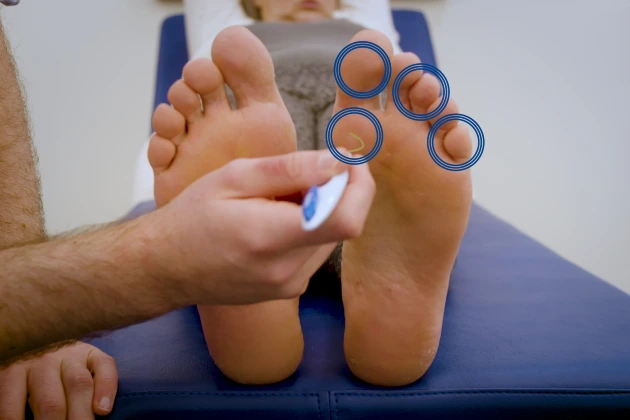
Doctor performing a monofilament sensation test during a diabetic foot assessment in Kuala Lumpur

Foot sensation assessment: A monofilament test may be used to check whether protective sensation in different areas of the foot has been reduced.

Clinical Foot Assessment

Diabetic Foot Assessment & Care Process

Diabetic foot assessment looks at the condition of the skin, sensation, circulation, wounds and other changes that may increase the risk of foot complications. The findings help guide appropriate treatment, monitoring and preventive foot-care advice.

01

Medical History & Foot Concerns

The assessment begins by discussing diabetes history, previous foot wounds or infections, numbness, pain, footwear concerns and any recent changes noticed in the feet. Diabetes control is also reviewed, and when needed, the physician may advise adding or adjusting medication based on the patient's condition.

02

Skin, Wound & Foot Examination

The feet are examined for ulcers, cuts, blisters, calluses, cracks, swelling, redness, pressure areas and other visible changes that may need further care.

03

Sensation & Circulation Assessment

Sensation may be checked with a monofilament or other clinical tests, while circulation and related findings may also be assessed to identify factors that can affect healing and foot health.

04

Care Plan & Follow-Up

Based on the assessment, suitable wound care, pressure protection, footwear advice, monitoring, further investigation or referral may be discussed according to the individual foot problem.

Patient Education Video

Learn More About Diabetic Foot Care

Watch this educational video to learn more about diabetic foot health, common foot concerns and the importance of recognising changes early when living with diabetes.

Diabetic foot care patient education video
Patient Education

Understanding Diabetic Foot Care

This educational video provides helpful information related to diabetic foot health and supports patients in understanding why regular foot awareness and appropriate assessment are important.

Educational information only: This video provides general information and does not replace an individual medical consultation, examination, diagnosis or personalised treatment recommendation.

Patient-Focused Foot Care

Why Choose KMZ for Diabetic Foot Care?

Dr KMZ provides clinical assessment for diabetic foot concerns, including wounds, reduced sensation, pressure areas and other changes that may require monitoring, treatment or further care.

Detailed Foot Assessment

The skin, wounds, pressure areas, swelling and other visible foot changes are examined together with relevant symptoms and medical history.

Sensation & Nerve Checks

Foot sensation may be assessed using appropriate clinical methods, including monofilament testing when needed, to identify reduced protective sensation.

Wound & Pressure Area Evaluation

Ulcers, blisters, calluses, skin cracks and pressure areas can be assessed to help determine suitable wound care, protection or further management.

Individual Care & Follow-Up

Care may include monitoring, wound management, pressure protection, footwear guidance, further investigation or referral according to the patient's findings.

Patient Feedback

What Patients Say About KMZ Orthoman

Read feedback shared by patients on Google about their experience with KMZ Orthoman, clinical assessment and orthopaedic care.

Google Reviews
Real Patient Experiences

Feedback shared through Google reviews.

Reviews help patients understand the care experience

Patient experiences and treatment needs can differ. Individual diabetic foot concerns should be assessed according to the patient's symptoms, examination findings and medical needs.

Frequently Asked Questions

Common Questions About Diabetic Foot Care

Find answers to common questions about diabetic foot symptoms, numbness, ulcers, monofilament testing, foot examinations, prevention and diabetic foot care in Kuala Lumpur.

What is diabetic foot care and why is it important?

Diabetic foot care includes regular foot checks, clinical assessment and early management of wounds, skin changes, reduced sensation and circulation concerns. Diabetes can affect nerves and blood flow in the feet, making injuries harder to notice and sometimes slower to heal. Early identification of problems can help reduce the risk of ulcers, infection and other serious foot complications.

What are the early signs of diabetic foot problems?

Early signs may include numbness, tingling, burning pain, swelling, redness, unusual warmth, changes in skin colour, cracks, blisters, calluses or a cut or sore that is not healing normally. Some people with diabetic nerve damage may have a foot problem without significant pain, which is why regular visual checks are important.

How often should a person with diabetes have their feet checked?

People with diabetes should generally have a comprehensive foot examination at least once a year. More frequent assessment may be recommended for people with reduced sensation, poor circulation, foot deformity, a previous ulcer or amputation, or other factors that increase the risk of diabetic foot complications.

What is a monofilament test for diabetic feet?

A monofilament test is a simple clinical test used to assess protective sensation in the foot. A thin calibrated filament is gently applied to selected areas of the foot to check whether pressure can be felt. Reduced sensation may indicate an increased risk of unnoticed injuries and foot ulcers. The test is usually considered together with other parts of the neurological and foot examination.

Why do people with diabetes get numbness or tingling in their feet?

Diabetes can damage peripheral nerves over time, a condition known as diabetic peripheral neuropathy. It may cause numbness, tingling, burning, pain or reduced ability to feel pressure, heat and cold. Because reduced sensation can make injuries difficult to notice, new or persistent sensory changes should be assessed clinically.

Can a diabetic foot ulcer heal?

Many diabetic foot ulcers can heal with appropriate treatment, but healing time varies according to the wound, circulation, infection, pressure on the affected area and overall health. Management may involve wound care, reducing pressure on the ulcer, infection treatment when needed, circulation assessment and regular follow-up. Early assessment is important because untreated ulcers can become more complicated.

When should I see a doctor for a diabetic foot wound?

A person with diabetes should seek medical assessment promptly for a new ulcer, blister, cut or wound that is not improving, particularly if there is increasing redness, warmth, swelling, pain, discharge, an unpleasant smell or changes in skin colour. Black tissue or rapidly worsening signs of infection require urgent medical evaluation.

How can I prevent diabetic foot problems?

Check your feet every day for cuts, blisters, swelling, redness and skin changes. Keep the feet clean and dry, wear comfortable well-fitting shoes and socks, avoid walking barefoot and manage diabetes according to your medical care plan. Corns, calluses, wounds and nail problems should be handled carefully, particularly when sensation or circulation is reduced.

Can people with diabetes walk barefoot?

Walking barefoot is generally not recommended for people with diabetes, especially when there is reduced foot sensation. Small cuts, burns, splinters or pressure injuries may occur without being noticed. Properly fitting footwear helps protect the feet both indoors and outdoors from avoidable injuries.

How much does diabetic foot care cost in Kuala Lumpur?

The cost of diabetic foot care in Kuala Lumpur varies according to the type of consultation, foot examination, wound severity, diagnostic tests and treatment required. A simple diabetic foot assessment may differ in cost from care for an ulcer, infection or circulation-related problem. An appropriate estimate can be discussed after the foot condition has been clinically assessed.

Diabetic foot risk differs from person to person

The appropriate assessment and follow-up depend on sensation, circulation, skin condition, wounds, previous foot problems and individual medical history.

Translate »