
kmzorthoman@gmail.com

Move Better With Expert Care

KMZ Orthoman Knee Ligament Care

Knee Ligament Injury Treatment in Kuala Lumpur

Get orthopaedic assessment and treatment guidance for knee ligament injury, knee ligament tear, knee pain, swelling and knee instability after a twist, fall or sports injury. Dr KMZ provides patient-friendly care based on symptoms, clinical examination and investigation findings when required.

Knee Ligament Assessment Treatment Guidance Convenient Appointment Booking

Symptoms To Watch

Common Signs of Knee Ligament Injury

If knee pain starts after a twist, fall or sports injury, these signs may suggest a ligament problem. They do not confirm a diagnosis, but they are good reasons to get your knee assessed by an orthopaedic specialist.

Knee pain after twisting

Pain that starts after a sudden twist, pivot, fall or awkward landing.

Swelling around the knee

Swelling can appear after injury and may make the knee feel tight.

Popping sound or sensation

Some patients feel or hear a pop at the time of the knee injury.

Knee feels unstable

The knee may feel like it is giving way when standing, walking or turning.

Difficulty walking

You may struggle to put weight on the knee or continue normal activity.

Pain during sports or stairs

Symptoms may become more obvious while running, climbing stairs or changing direction.

Knee Ligament Anatomy

Understanding the Main Knee Ligaments

The knee has key ligaments that help keep it stable during walking, running, turning and sports activity. A knee ligament injury can affect one or more of these stabilising structures.
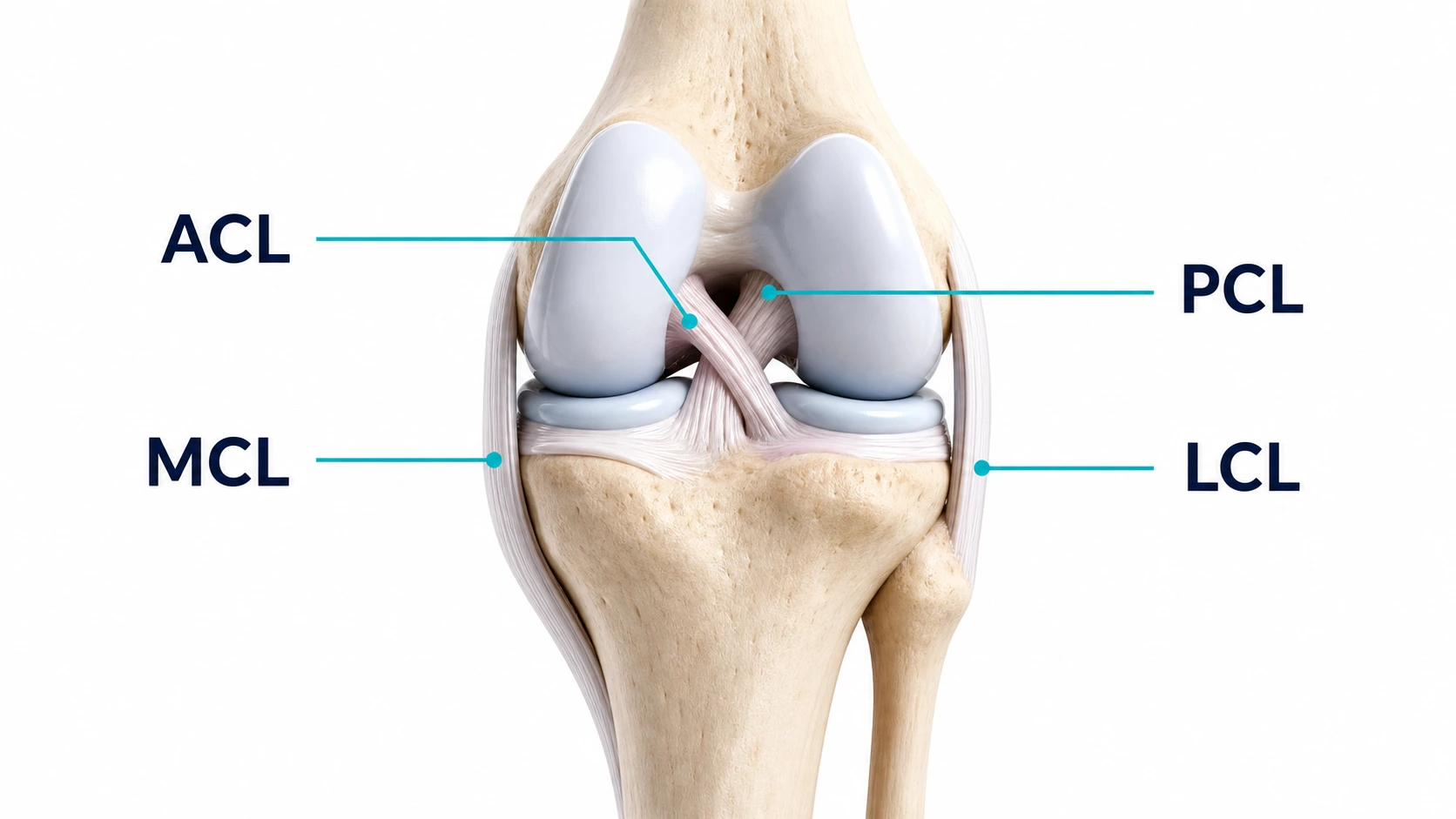
Knee ligament anatomy showing ACL PCL MCL and LCL
ACL Often involved in twisting, pivoting or sudden direction-change injuries.
PCL May be affected after direct impact or force around the knee.
MCL Supports the inner side of the knee during side-to-side movement.
LCL Supports the outer side of the knee and helps with stability.

Note: This visual is for basic understanding only. A clinical assessment is needed to identify the exact ligament problem.

When To See A Doctor

Get Your Knee Checked If Pain or Instability Continues

If knee pain, swelling or instability continues after a twist, fall or sports injury, it is better to get your knee assessed by an orthopaedic specialist. Early assessment can help identify the likely cause and guide the next suitable step.

Knee feels unstable or gives way
Swelling does not settle
Pain after sports injury
Difficulty walking or putting weight
Popping sound during injury
Knee locks or feels stuck

Important: Symptoms can overlap between ligament, meniscus, cartilage and other knee problems. A proper clinical assessment helps avoid guessing.

Treatment Approach

Knee Ligament Injury Treatment Approach

Treatment depends on the type of ligament injury, knee stability, activity level and assessment findings. Dr. Kamarulzaman will guide the suitable next step after checking your knee.

01

Assessment First

Knee movement, stability, swelling and symptoms are checked before deciding the treatment direction.

02

Support & Pain Control

Activity modification, medication, knee support or bracing may be advised when clinically suitable.

03

Physiotherapy Guidance

Exercises may help restore knee movement, strength and stability as part of a guided recovery plan.

04

Surgery If Required

Some unstable ligament tears may need a surgical discussion after clinical assessment and imaging review.

The right treatment starts with the right assessment. This section gives a basic overview only; the final plan should be based on your symptoms, examination findings and specialist advice.

Video Guide

Knee Ligament Injury Explained Simply

Short videos to help patients understand knee pain, instability and specialist assessment.

Knee Ligament Injury Symptoms

Understand common signs such as pain, swelling and an unstable knee after injury.

Knee Pain & Instability

A quick patient-friendly guide about knee symptoms that should be checked.

How The Knee Is Assessed

Learn why a proper specialist assessment helps guide the next step.

Patient-Focused Knee Care

Why Choose KMZ Orthoman for Knee Ligament Injury?

KMZ Orthoman provides assessment-based guidance for knee ligament injury, knee pain, swelling and instability, helping patients understand the safest next step after a proper orthopaedic review.

Patient-Focused Assessment

Each knee is assessed based on pain, swelling, movement, stability and the patient's daily activity or sports needs.

Clear Treatment Guidance

Patients receive simple guidance on what the injury may involve and what treatment direction may be suitable.

Ligament Injury Experience

Assessment may help identify ACL, PCL, MCL or LCL concerns and whether imaging or further care is needed.

Suitable Care Options

Care may include support, physiotherapy guidance, pain control or specialist treatment when clinically required.

Patient Feedback

What Patients Say About KMZ Orthoman

Read Google reviews shared by patients about their experience with KMZ Orthoman, orthopaedic consultation and patient-focused care in Kuala Lumpur.

Google Reviews
Real Patient Experiences

Feedback shared through Google reviews.

Reviews help patients make an informed decision

Experiences may vary from patient to patient. A consultation is required to discuss knee ligament injury, knee pain, swelling, instability and suitable next steps.

Frequently Asked Questions

Common Questions About Knee Ligament Injury

These answers are based on common patient search questions. They are for general awareness only, and a proper knee assessment is needed before the doctor can advise the suitable next step.

What is a knee ligament injury?

A knee ligament injury happens when one of the strong bands that support the knee is stretched or torn. It can cause knee pain, swelling, stiffness or a feeling that the knee is unstable.

What does knee ligament pain feel like?

Knee ligament pain may feel sharp after a twist, fall or sports injury. Some patients also notice swelling, tenderness, difficulty walking or discomfort when turning, climbing stairs or changing direction.

What are the signs of a knee ligament tear?

A knee ligament tear may cause a pop feeling, sudden swelling, pain, bruising, reduced movement or the knee giving way. A doctor should assess the knee to understand whether a tear is likely.

Which knee ligament can be injured: ACL, PCL, MCL or LCL?

The main knee ligament anatomy includes ACL, PCL, MCL and LCL. The ligament involved depends on how the injury happened, so the doctor may check movement, stability and injury history.

How to test for knee ligament injury?

Knee ligament injury testing should be done by a doctor or trained clinician. Self-testing can be unreliable or painful. The doctor may examine knee stability and may advise imaging if needed.

Can I walk with a knee ligament injury?

Some patients can walk after a mild knee ligament injury, while others may find it difficult or unsafe. If walking causes pain, swelling or instability, it is better to get the knee checked.

Do I need an MRI for knee ligament injury?

Not every patient needs an MRI. The doctor may suggest imaging if symptoms, injury history or knee examination suggest a possible ligament tear or another knee structure that needs checking.

What is the best knee ligament injury treatment?

Knee ligament injury treatment depends on the ligament involved, injury severity, swelling, knee stability and activity goals. Care may include support, pain control, physiotherapy guidance or specialist treatment when required.

Can a knee ligament tear heal without surgery?

Some knee ligament injuries may improve with non-surgical care. Complete tears, repeated instability or higher activity demands may need further specialist discussion after assessment.

Where can I get knee ligament injury treatment in Kuala Lumpur?

KMZ Orthoman provides orthopaedic consultation for knee ligament injury, knee ligament pain, swelling and instability in Kuala Lumpur. The doctor will assess the knee before discussing suitable guidance. Contact KMZ Orthoman.

Every knee injury is different

The suitable next step depends on symptoms, knee stability, injury history, clinical findings and consultation with the doctor.

Translate »