
Minimally Invasive Orthopaedic Surgery: Benefits, Uses and Recovery
Joint pain and injuries can make everyday activities such as walking, climbing stairs, exercising or lifting the arm difficult. When non-surgical treatment does not provide enough improvement, an orthopaedic specialist may recommend minimally invasive surgery for selected knee, shoulder or ankle conditions.
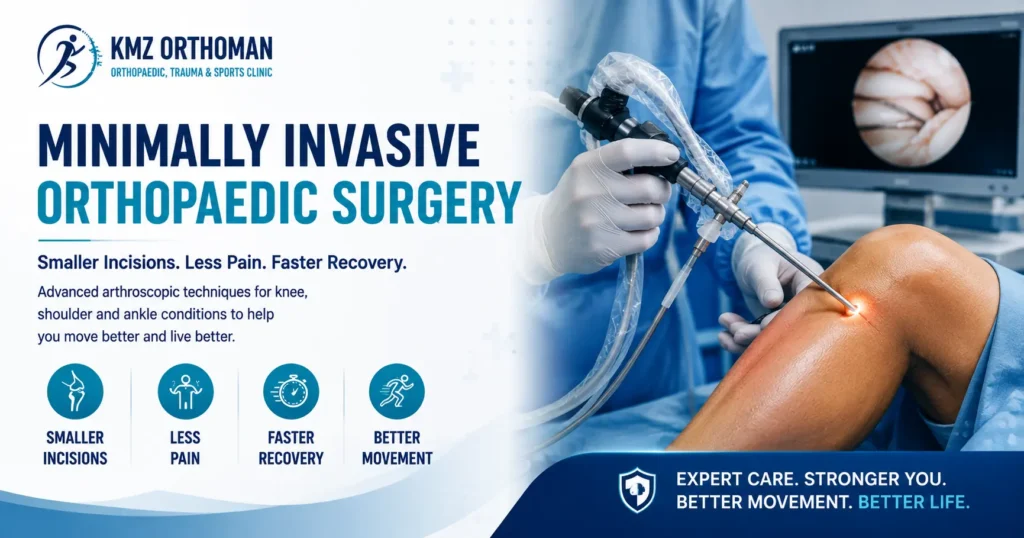
Minimally invasive orthopaedic surgery uses smaller incisions and specialised instruments to reach the affected joint. Arthroscopy is one of the most common techniques. It allows the surgeon to see inside the joint with a small camera and treat certain problems when appropriate.
However, not every injury requires surgery. The right treatment depends on the diagnosis, symptoms, examination findings and imaging results.
Understanding Minimally Invasive Orthopaedic Surgery
Minimally invasive orthopaedic surgery allows surgeons to perform selected procedures through small openings rather than one large incision.
During arthroscopy, the surgeon inserts a small camera called an arthroscope into the joint. The camera sends clear images to a monitor, which helps the surgeon examine cartilage, ligaments, tendons and other structures.
If the joint needs treatment, the surgeon can insert small instruments through separate openings.
Orthopaedic surgeons commonly use arthroscopic techniques for selected knee, shoulder and ankle conditions. The exact procedure depends on the injury and the structure involved.
Common Uses in Orthopaedic Care
Different joints can develop different problems. Some conditions improve with physiotherapy or activity modification, while others may need surgical treatment.
Knee Problems
The knee commonly develops injuries involving the meniscus, cartilage and ligaments.
A meniscus injury can cause pain, swelling, clicking, catching or locking. Many meniscus tears improve with non-surgical care, but some continue to affect movement and daily activity.
In selected cases, an orthopaedic surgeon may use knee arthroscopy to repair or treat the damaged area. Arthroscopy can also help with certain cartilage problems or loose fragments inside the joint.
The specialist will choose treatment according to the type of injury, symptoms and examination findings.
Shoulder Problems
Shoulder injuries can cause pain, weakness, stiffness or difficulty raising the arm.
Problems may involve tendons, ligaments or other soft tissues around the shoulder. Repeated instability can also affect work, exercise and sports.
Rehabilitation helps many shoulder conditions. If symptoms continue or the joint has a structural problem, the specialist may discuss shoulder arthroscopy as one possible treatment option.
The final decision depends on the diagnosis and how much the condition affects shoulder function.
Ankle Problems
Ankle pain can continue after a sprain, sports injury or another joint problem.
Some patients notice swelling, stiffness or discomfort during walking and exercise. Others may experience persistent symptoms even after initial treatment.
An orthopaedic assessment can help identify the cause. Depending on the findings, treatment may include rehabilitation, medication or minimally invasive surgery for selected ankle conditions.
Benefits of Minimally Invasive Orthopaedic Surgery
Smaller incisions are one of the main differences between minimally invasive procedures and traditional open surgery.
For suitable patients and procedures, this approach may reduce disruption to tissues around the joint.
Possible benefits include:
- Smaller surgical incisions
- Less visible scarring
- Reduced disturbance to nearby tissues
- Direct viewing of the inside of the joint
- Earlier return to some daily activities in selected cases
These benefits vary according to the procedure.
A smaller incision does not always mean a very short recovery. Ligaments, tendons, cartilage and the meniscus still need time to heal after repair.
Assessment Before Surgery
An orthopaedic specialist first needs to understand the cause of the symptoms.
The consultation usually starts with a discussion about when the pain began, how the injury happened and which movements make the symptoms worse.
Next, the specialist may check:
- Joint movement
- Strength
- Swelling
- Tenderness
- Stability
- Pain during movement
Imaging can provide additional information when needed.
X-rays help doctors assess bones, arthritis and joint alignment. An MRI can show more detail about ligaments, cartilage, tendons and the meniscus.
The doctor then combines the patient’s symptoms, physical examination and imaging results before recommending treatment.
Recovery and Rehabilitation
Recovery after minimally invasive orthopaedic surgery varies between patients.
A simple arthroscopic procedure may require less recovery time than a ligament, tendon or meniscus repair. The joint involved also affects how quickly a patient can return to normal activities.
Rehabilitation often plays an important role after surgery.
A rehabilitation programme may focus on improving:
- Joint movement
- Muscle strength
- Balance
- Stability
- Control during movement
Patients should follow their surgeon’s advice about walking, driving, work and exercise.
Sports usually require more time because the joint needs enough strength and control to handle running, jumping or sudden changes in direction.
Returning to demanding activity too early can place extra stress on healing tissues.
Minimally Invasive Surgery and Open Surgery
Minimally invasive surgery and open surgery use different ways to reach the affected area.
Minimally invasive techniques use smaller openings and specialised instruments. Open surgery generally gives the surgeon wider access through a larger incision.
Neither method suits every condition.
Arthroscopy may work well for certain joint problems, while complex injuries may require an open procedure. The specialist chooses the approach that best matches the condition and treatment goal.
The size of the incision should not be the only factor when choosing treatment. A safe and suitable procedure matters more.
Risks and Important Considerations
Minimally invasive orthopaedic surgery still carries surgical risks.
Possible complications can include infection, bleeding, swelling, stiffness, blood clots or injury to nearby nerves and blood vessels. Some patients may also continue to experience symptoms after surgery.
The level of risk depends on the procedure and the patient’s overall health.
Before surgery, the specialist should explain the expected benefits, possible risks and recovery plan. This discussion helps patients understand what to expect before making a treatment decision.
When Orthopaedic Assessment May Be Helpful
Mild joint discomfort often improves after rest or temporary activity changes.
Persistent or worsening symptoms need more attention.
Consider an orthopaedic assessment if you have:
- Ongoing joint pain
- Repeated swelling
- Reduced movement
- Difficulty walking or using the joint
- Joint instability or giving way
- Catching or locking
- Pain that returns whenever you exercise
These symptoms do not automatically mean you need surgery.
An assessment helps the specialist identify the cause and decide whether physiotherapy, medication, rehabilitation or another treatment may help.
Frequently Asked Questions
Is arthroscopy a type of minimally invasive surgery?
Yes. Arthroscopy is a type of minimally invasive orthopaedic
surgery. The surgeon uses a small camera and specialised
instruments to examine and treat selected problems inside a joint.
Does minimally invasive surgery mean faster recovery?
Not always. Smaller incisions can reduce tissue disruption, but
recovery depends on the condition and the procedure. A repaired
ligament or meniscus can still require a longer rehabilitation
period.
Do all meniscus injuries need surgery?
No. Many meniscus injuries improve with non-surgical treatment.
A specialist may recommend arthroscopy for selected tears that
continue to cause symptoms or affect joint function.
Will I need physiotherapy after surgery?
Many patients need rehabilitation after orthopaedic surgery.
The programme depends on the procedure, the joint involved and
the patient’s individual recovery.
Can minimally invasive surgery treat knee, shoulder and ankle problems?
Yes. Orthopaedic surgeons can use minimally invasive techniques
for selected conditions affecting the knee, shoulder and ankle.
A clinical assessment helps determine whether the procedure suits
the individual patient.

Ask a Question or Leave a Comment
Share your feedback or ask a general question about this article.
No comments yet. Be the first to share your feedback or ask a question.