
Knee Ligament Injury: ACL, MCL & PCL Symptoms, Causes and Treatment
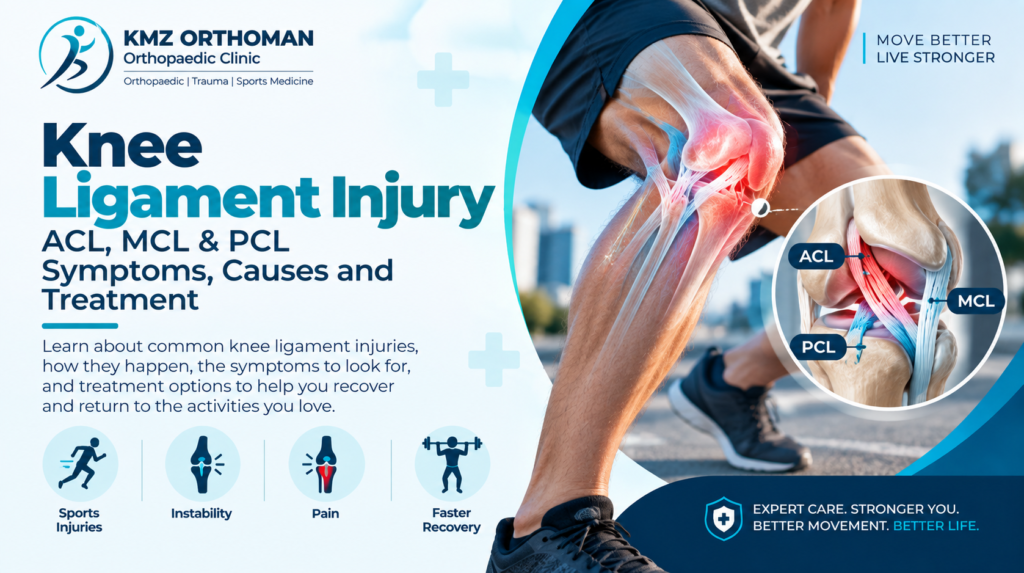
Knee pain, swelling or a feeling that the knee is giving way after a twist, fall or sports injury may indicate a ligament problem. These symptoms can affect walking, climbing stairs and returning to exercise. Patients with ongoing symptoms may need an assessment to identify the cause and discuss suitable knee ligament injury treatment in Kuala Lumpur.
This guide explains the differences between ACL, MCL and PCL injuries, common warning signs, and how assessment helps guide treatment.
What Is a Knee Ligament Injury?
A knee ligament injury happens when a ligament is stretched or torn. Ligaments are strong bands of tissue that connect bones and help keep the knee stable.
An injury may involve a mild sprain, a partial tear or a complete tear. More than one structure can be injured at the same time, including the meniscus or cartilage. 1
ACL, MCL and PCL: What Is the Difference?
| Ligament | Main role | Common injury mechanism |
|---|---|---|
| ACL — anterior cruciate ligament | Helps control forward movement of the shinbone and rotational stability. | Sudden changes of direction, pivoting or an awkward landing. |
| MCL — medial collateral ligament | Supports the inner side of the knee and helps control sideways movement. | Force pushing the knee inward, sometimes following a blow to its outer side. |
| PCL — posterior cruciate ligament | Helps prevent the shinbone moving too far backwards. | A strong impact to the shin when the knee is bent, or a fall onto a bent knee. |
The knee also has an LCL, which supports its outer side. Pain location alone cannot identify which ligament is injured. 2, 3, 4
Common Knee Ligament Injury Symptoms
Symptoms may include:
- Pain following a twist, fall or impact.
- Swelling around the knee.
- A popping sound or sensation during the injury.
- Stiffness or reduced movement.
- Difficulty bending or straightening the knee.
- Discomfort when walking or putting weight on the leg.
- A feeling that the knee is unstable or giving way.
MCL injuries often cause pain along the inner side of the knee. ACL and PCL injuries may also cause swelling and instability. Symptoms overlap, so examination is important. 2, 3, 4
What Causes Knee Ligament Injuries?
Ligament injuries can happen during sport, an accident or a fall. A planted foot followed by a sudden turn can place considerable force on the knee. A collision or awkward landing may also injure its supporting tissues.
People with ongoing symptoms after exercise can seek advice from a sports injury specialist before returning to demanding activity. 1
How Is a Knee Ligament Injury Diagnosed?
Diagnosis starts with the injury history and a physical examination. The doctor may ask how the injury happened, when swelling developed and whether the knee gives way.
Assessment may include checking movement, tenderness, swelling and ligament stability.
X-rays help identify fractures or other bone injuries, but do not show ligament tears directly. An MRI can provide more information about ligaments, the meniscus and cartilage. It is not necessary for every patient; the doctor decides which investigations are useful. 2
Does a Knee Ligament Injury Always Need Surgery?
No. Treatment depends on the ligament involved, injury severity, knee stability, associated injuries and the patient’s activity goals.
Non-surgical care
Care may include activity modification, a brace or walking support when appropriate, and physiotherapy to restore movement and strength. Many isolated MCL injuries and some isolated PCL injuries can be managed without surgery. 3, 4
When surgery may be discussed
Reconstruction may be considered for an ACL tear causing persistent instability, particularly when the patient wants to return to pivoting sports. Combined injuries can also affect the decision.
For a PCL injury, persistent pain or instability despite appropriate rehabilitation may lead to a surgical discussion. A scan result alone does not determine the treatment plan. 4, 5
Recovery and Returning to Activity
There is no single recovery time for every knee ligament injury. Progress depends on the injury, treatment and rehabilitation needs.
Returning to sport should be based on restored movement, strength, stability and clinical guidance, rather than pain relief alone. Rehabilitation is important whether or not surgery is needed. 3, 4, 5
Could the Pain Be Caused by Something Else?
Knee pain does not automatically mean a torn ligament. Meniscus injuries, tendon problems, fractures and arthritis can also cause symptoms.
For example, knee osteoarthritis may cause pain and stiffness that develop gradually. Examination helps distinguish between these conditions and identify any overlapping problems. 1
When Should You Seek Medical Attention?
Arrange an assessment for ongoing pain, swelling, restricted movement or repeated giving way after an injury.
Seek urgent medical attention if:
- You cannot move the knee or put weight on the leg.
- Pain or swelling is severe.
- The knee looks deformed or becomes locked.
- The knee is hot or red and you also have a fever or feel unwell.
These symptoms need prompt assessment rather than waiting for a routine appointment. 6
Knee Ligament Assessment in Kuala Lumpur
Dr Kamarulzaman at KMZ Orthoman provides assessment and treatment guidance for knee ligament injuries in Kuala Lumpur.
A consultation allows the doctor to review the injury, examine the knee and discuss available imaging when relevant. Treatment recommendations are based on the findings and the patient’s needs.
Bring any previous scans, reports and a list of current medicines. You can book an orthopaedic appointment to discuss ongoing knee pain, swelling or instability.
Frequently Asked Questions
Can I still walk with a torn knee ligament?
Some people can walk after a ligament tear. Being able to walk does not rule out a significant injury, particularly if the knee gives way or repeatedly swells. 2
Can a knee ligament tear heal without surgery?
Does a popping sound mean I have torn my ACL?
Do I need an MRI before seeing a specialist?
Usually, the consultation can take place first. The specialist can then decide whether an MRI or another investigation is needed. Bring existing imaging if you have it. 2
How long does a knee ligament injury take to recover?
Where can I get a knee ligament injury assessed in Kuala Lumpur?
KMZ Orthoman offers orthopaedic assessment with Dr Kamarulzaman. Contact the clinic to arrange a consultation and discuss the appropriate next step.
Medical References
- American Academy of Orthopaedic Surgeons — Common Knee Injuries
- American Academy of Orthopaedic Surgeons — Anterior Cruciate Ligament (ACL) Injuries
- American Academy of Orthopaedic Surgeons — Collateral Ligament Injuries
- American Academy of Orthopaedic Surgeons — Posterior Cruciate Ligament Injuries
- American Academy of Orthopaedic Surgeons — ACL Injury: Does It Require Surgery?
- NHS — Knee Pain


Ask a Question or Leave a Comment
Share your feedback or ask a general question about this article.
No comments yet. Be the first to share your feedback or ask a question.