
Common Sports Injuries: Symptoms, Causes and When to See a Specialist

Sports injuries can happen during exercise, recreational activities or competitive sports. They may affect the muscles, ligaments, tendons, bones or joints and can cause pain, swelling or difficulty moving. If symptoms continue or interfere with normal activity, a sports injury specialist in Kuala Lumpur can assess the injury and discuss suitable treatment options.
Some sports injuries happen suddenly after a fall, twist or collision, while others develop gradually because of repeated movement or overuse. Knowing the common signs can help you decide when an injury needs medical attention.
What Are the Most Common Sports Injuries?
Different sports place different levels of stress on the body, but some injuries are seen more often than others.
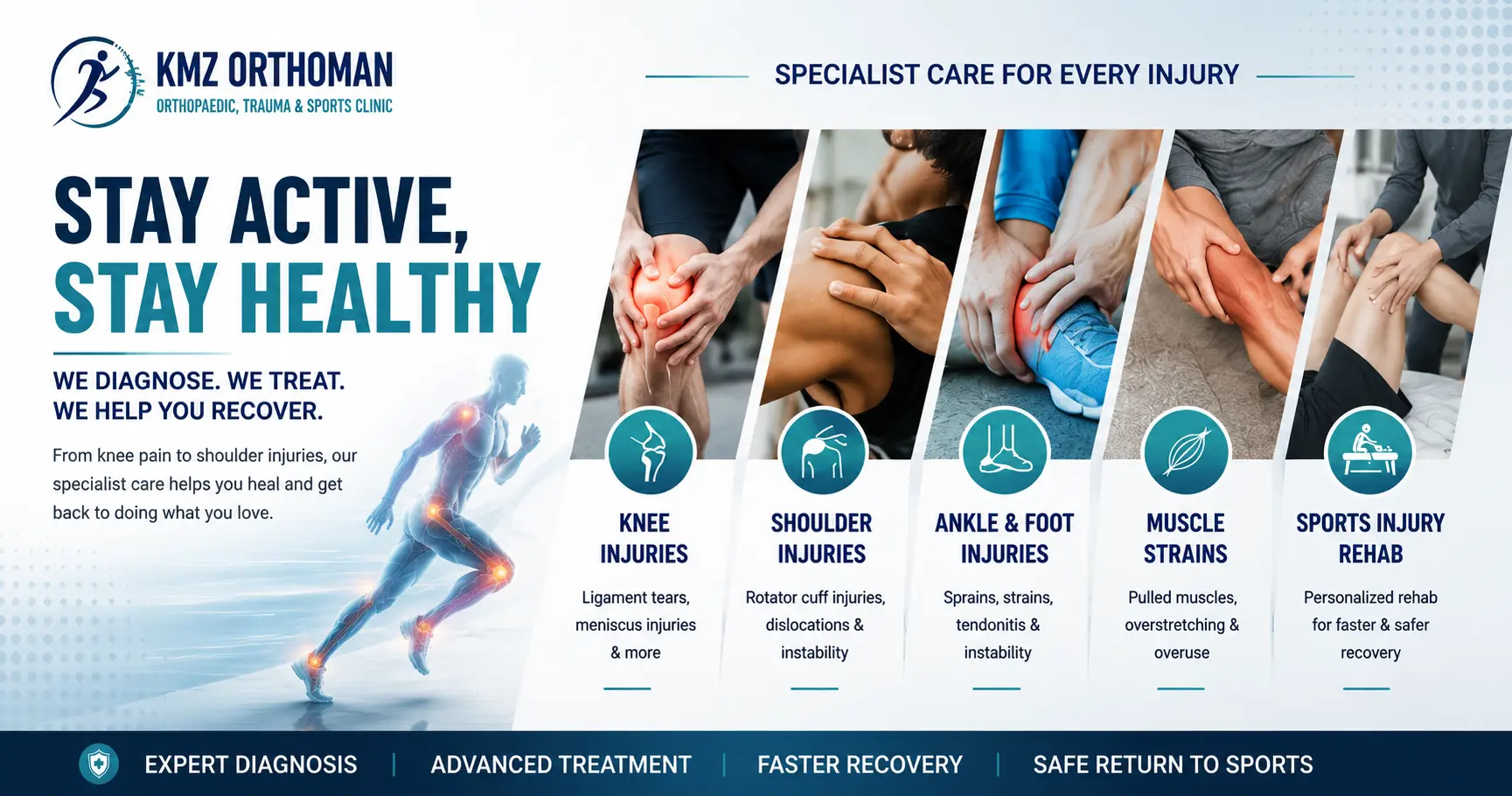
Sprains and Muscle Strains
A sprain affects a ligament, which connects one bone to another and helps keep a joint stable. Ankle and knee sprains are common in sports that involve running, jumping or sudden changes in direction.
A strain affects a muscle or tendon. It may happen when the tissue is overstretched or placed under sudden stress. The hamstrings, calf and groin are commonly affected.
Both injuries may cause pain, swelling, tenderness and reduced movement.
Knee Ligament Injuries
The knee is particularly vulnerable during sports involving pivoting, jumping and quick changes in direction.
The anterior cruciate ligament, or ACL, is one of the main ligaments that helps stabilise the knee. An ACL injury may cause sudden pain, swelling and a feeling that the knee is unstable or giving way.
Other knee ligaments can also be injured depending on how the knee twists or receives impact.
Meniscus Injuries
The meniscus is cartilage inside the knee that helps absorb pressure and support smooth movement.
A meniscus injury can occur when the knee twists while the foot remains planted. Symptoms may include pain, swelling, clicking, catching or difficulty fully bending or straightening the knee.
Not every meniscus injury requires surgery. Treatment depends on the type of injury and how much it affects knee function.
Shoulder Injuries
Shoulder injuries are common in swimming, throwing sports, badminton, tennis and activities involving repeated overhead movement.
Patients may experience pain when raising the arm, reduced strength, stiffness or a feeling that the shoulder is unstable.
Repeated dislocation or persistent shoulder pain should be properly assessed.
Ankle and Foot Injuries
Ankle sprains are among the most common sports injuries. They often occur when the ankle suddenly rolls or twists.
Foot and ankle pain may also develop gradually due to repeated running, jumping or sudden increases in training intensity.
Persistent swelling, difficulty walking or repeated ankle instability may indicate a more significant injury.
What Are the Common Symptoms of a Sports Injury?
Sports injury symptoms vary depending on the area affected and the severity of the problem.
Common signs include:
- Pain during or after activity
- Swelling or bruising
- Joint stiffness
- Reduced movement
- Muscle weakness
- Difficulty walking
- Joint instability or giving way
- Clicking, locking or catching
- Pain that returns whenever exercise resumes
Mild discomfort may improve with temporary activity modification. However, symptoms that continue or repeatedly return should not simply be ignored.
When Should You See a Sports Injury Specialist?
Not every sports injury requires specialist treatment, but some symptoms deserve further evaluation.
Consider an orthopaedic assessment if pain continues despite reducing activity, if swelling remains significant or if the injury begins to affect walking and normal movement.
A joint that repeatedly gives way, locks or feels unstable should also be assessed. This is particularly important with knee, shoulder and ankle injuries.
Prompt medical attention may be needed if there is severe pain, inability to bear weight, major swelling, visible deformity or a suspected fracture.
How Are Sports Injuries Diagnosed?
A sports injury assessment usually begins by discussing how the injury happened and which movements cause symptoms.
The doctor may examine the affected area for swelling, tenderness, movement, strength and stability.
Imaging is not required for every patient, but it may be recommended when additional information is needed.
X-rays can help assess fractures, bones and joint alignment.
MRI scans may be useful for soft-tissue injuries involving ligaments, cartilage, tendons or the meniscus.
The type of investigation depends on the symptoms and findings during the examination.
How Are Sports Injuries Treated?
Sports injury treatment depends on the diagnosis, severity of the injury and the patient’s normal activity level.
Many injuries can be treated without surgery.
Activity Modification and Rehabilitation
Temporarily reducing activities that cause pain may give the injured area time to recover.
Physiotherapy and rehabilitation can help restore strength, movement, balance and joint control. Exercises are usually progressed gradually as the injury improves.
Pain Management and Support
Medication may sometimes be recommended for pain or inflammation based on the patient’s medical condition.
Braces or other supports may also be useful for selected joint or ligament injuries.
Surgery for Sports Injuries
Surgery is not required for every sports injury.
It may be considered for selected ligament, meniscus, cartilage or other structural injuries when there is ongoing instability, pain or loss of function despite appropriate non-surgical treatment.
The decision should be based on the diagnosis, imaging findings and individual patient needs.
How Long Does Recovery Take?
Recovery time varies considerably.
A mild sprain or muscle strain may improve within a relatively short period, while a significant ligament injury, fracture or surgery may require a longer rehabilitation programme.
A safe return to sport should consider more than pain alone. Strength, movement, stability and confidence should also be restored before returning to full activity.
Returning too early may increase the risk of another injury.
Can Sports Injuries Be Prevented?
Not every injury can be prevented, but good training habits may reduce the risk.
A proper warm-up, gradual increases in exercise intensity and enough recovery between training sessions can help. Strength and mobility exercises may also improve movement and joint control.
Suitable footwear and correct sporting technique are important for some activities.
Most importantly, recurring pain should not repeatedly be trained through without understanding why it is happening.
Frequently Asked Questions
What are the most common sports injuries?
Common sports injuries include muscle strains, ligament sprains,
knee injuries, meniscus problems, shoulder injuries and ankle or
foot injuries. The type of injury often depends on the sport,
movement involved and how the injury occurred.
When should I see a specialist for a sports injury?
Consider medical assessment if pain continues, swelling is
significant, movement becomes difficult or a joint repeatedly
feels unstable, locks or gives way. Severe pain, visible deformity
or inability to bear weight should be assessed promptly.
Do all sports injuries need an MRI?
No. Many sports injuries can first be assessed through symptoms
and a physical examination. MRI may be recommended when more
information about ligaments, tendons, cartilage, the meniscus or
other soft tissues is needed.
Do sports injuries always require surgery?
No. Many sports injuries can be managed with activity
modification, rehabilitation, physiotherapy, pain management or
other non-surgical treatment. Surgery may be considered for
selected injuries when clinically appropriate.
When can I return to sport after an injury?
Return to sport depends on the type of injury, healing progress,
strength, movement and joint stability. Recovery should not be
based only on a fixed number of days or weeks, as each injury and
patient may recover differently.

Ask a Question or Leave a Comment
Share your feedback or ask a general question about this article.
No comments yet. Be the first to share your feedback or ask a question.