
Knee Pain When Climbing Stairs: Causes and When to Seek Help
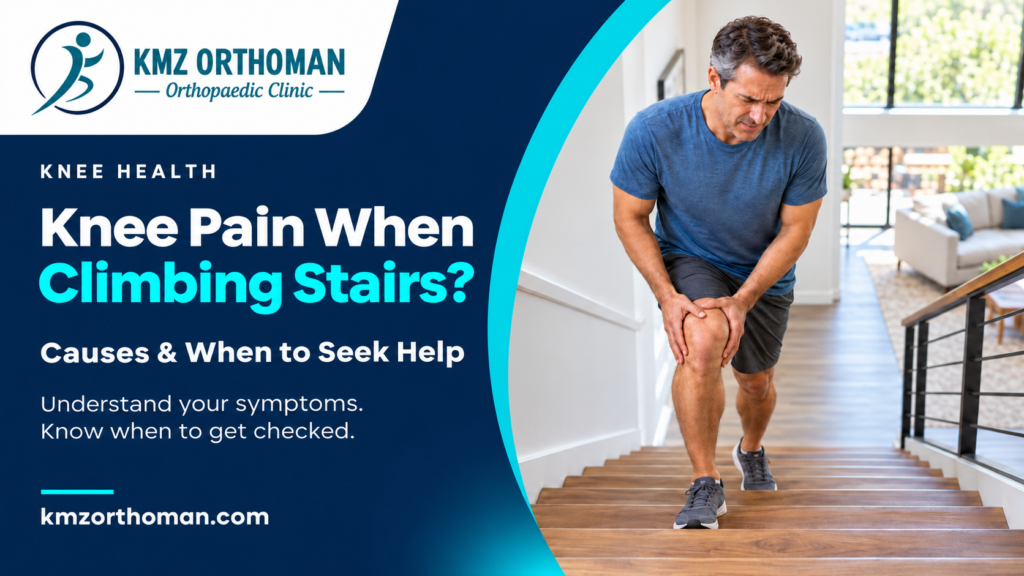
Knee pain when climbing stairs can make a normal journey to work or around the home uncomfortable. Several conditions can cause this symptom, so pain on stairs does not automatically mean arthritis. If arthritis is suspected, osteoarthritis treatment in Kuala Lumpur begins with assessing the knee and discussing care that suits your symptoms and daily activities.
Why does my knee hurt on stairs? Possible causes include pain around the kneecap, knee osteoarthritis or a meniscus injury. The location of the pain, swelling, stiffness and any recent injury help guide assessment. The symptom alone cannot identify the cause.
Why Can Stairs Trigger Knee Pain?
As you bend and straighten your knee, the kneecap moves along a groove at the front of the thighbone. Climbing and descending stairs place demands on this part of the joint.
If the kneecap joint is irritated or affected by arthritis, stairs may bring on pain even when walking on level ground feels easier. Whether going up, coming down or both hurts is useful information to share, but it does not establish a diagnosis.
Possible Causes of Knee Pain When Climbing Stairs
Patellofemoral Pain
Patellofemoral pain describes discomfort at the front of the knee or around the kneecap. It can occur in active people and people who do not play sport.
Pain may develop with repeated knee bending, stairs, squatting or sitting with the knee bent for a long time. A recent increase in training or activity can be relevant. Assessment may include reviewing kneecap movement and the strength of the muscles supporting the knee.
Knee Osteoarthritis
Osteoarthritis involves changes in the knee joint, including its cartilage. It can cause activity-related pain, stiffness, swelling and reduced movement.
Some people notice discomfort on stairs or stiffness after sitting. Although it is more common with increasing age, younger adults can also be affected. The severity of symptoms and their effect on daily life help guide treatment; stair pain by itself cannot confirm osteoarthritis.
A Meniscus Injury
The menisci are pads of cartilage that help cushion the knee. A tear can follow a twisting injury, while age-related changes can make a tear possible after a less forceful movement.
Symptoms may include pain along the joint line, swelling, catching or difficulty fully straightening the knee. Being able to walk does not rule out a tear. A knee that becomes locked needs prompt medical attention.
| Symptom pattern | What to tell the doctor |
|---|---|
| Pain around the kneecap | Whether stairs, squatting or prolonged sitting make it worse, and whether activity recently changed. |
| Pain with stiffness or swelling | How long stiffness lasts, whether movement is restricted and which daily tasks are affected. |
| Pain after twisting or an injury | How the injury happened and whether the knee catches, locks or feels unstable. |
These patterns can overlap. Use them to describe your symptoms rather than to diagnose yourself.
What May Help While You Arrange an Assessment?
For mild symptoms without an urgent warning sign, temporarily reduce activities that clearly aggravate the knee. An ice pack wrapped in a towel, applied for up to 20 minutes, may help pain and swelling. Ask a pharmacist or doctor which pain relief is appropriate for you.
Longer-term care depends on the cause. For osteoarthritis, treatment commonly includes exercise tailored to your needs, such as strengthening and general fitness work. Weight management may help when appropriate. A physiotherapist can help you build a suitable programme instead of relying on prolonged rest.
For kneecap arthritis, changes to aggravating activities and a suitable exercise plan may also be considered. The right approach should reflect your examination and how the knee responds.
How Is Knee Pain Assessed?
The doctor will ask when the pain began, where it is felt and how stairs, walking and other activities affect it. Examination may include checking swelling, tenderness, movement and stability. Bring previous scans, reports and details of earlier treatment.
Imaging is selected according to the findings. Typical osteoarthritis can often be diagnosed clinically, without routine scans. An MRI may be useful when a meniscus injury is suspected, but it is not automatically needed for every painful knee.
When Should You Seek Help?
Arrange medical advice if knee pain is not improving within a few weeks. Seek advice sooner if symptoms are worsening or making normal movement difficult.
Frequently Asked Questions
Does knee pain on stairs always mean arthritis?
No. Patellofemoral pain and meniscus injuries are other possible explanations. Symptoms can overlap, so an examination is needed to identify the likely cause.
Why can going downstairs hurt as well?
Descending stairs also bends and loads the kneecap joint. Problems affecting this area, including patellofemoral arthritis, can make both directions uncomfortable. The direction of pain alone does not identify the condition.
Should I stop all exercise if my knee hurts?
Modify activities that aggravate symptoms and ask for advice about suitable exercise. For osteoarthritis, a tailored exercise programme is a core treatment. Severe pain, a new injury or urgent warning signs need assessment first.
Do I need an MRI before seeing the doctor?
Usually, you can attend an assessment first and bring any existing imaging. The doctor can decide whether further tests are useful. Routine imaging is not required for a typical clinical diagnosis of osteoarthritis.
Will knee pain when climbing stairs require surgery?
Not necessarily. Many knee conditions are managed with non-surgical care. Surgery is considered according to the diagnosis, functional limitations and response to appropriate treatment, rather than stair pain alone.
Where can I get knee pain assessed in Kuala Lumpur?
You can arrange a consultation with Dr Kamarulzaman at KMZ Orthoman, Hospital Pakar Pusrawi in Kuala Lumpur. Confirm your appointment with the clinic before visiting.
Arrange a Knee Assessment in Kuala Lumpur
If stairs have become uncomfortable, explain which movements cause pain and how the problem affects your routine. Dr Kamarulzaman at KMZ Orthoman provides assessment for knee pain, arthritis and other orthopaedic concerns.
For symptoms that do not require emergency care, consult an Orthopaedic Specialist in Kuala Lumpur to discuss the likely cause and suitable next steps. Contact the clinic to confirm an appointment at Hospital Pakar Pusrawi before visiting.


Ask a Question or Leave a Comment
Share your feedback or ask a general question about this article.
No comments yet. Be the first to share your feedback or ask a question.